


Previous Story
Pothole repairs costly in 2015
Posted On 15 Apr 2015
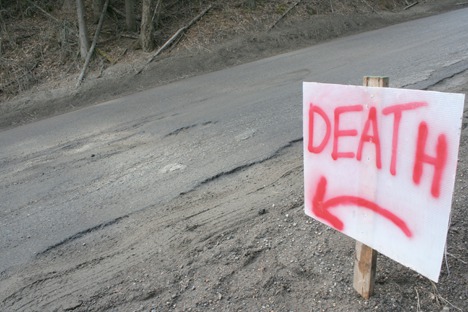 The city has been busy filling more potholes that usual this year, and spending more money to do so.
In 2012 the city spent $107,257 on cold-patching potholes, in 2013 it spend $165,600, and in 2014 $294,337.
“The cost of having spent $142,820 in just the first two months of 2015 raises concern that pothole repairs are on track to surpassing the cost of repairs in 2014, which was the highest in the last six years,” according to report submitted to council Monday.
In addition, as more spent on cold-patching, less is spent on hot-patching (usually done in summer) and major patching.
However, an increase in the city’s capital paving budget from $3.5 million in 2012 to $7 million in 2014 and 2015 is expected to reduce the number and cost of potholes over time, according to the city. The total budget for rehabilitation of roads, gravel roads, and sidewalks for 2014 was $9.8 million — nearly two times that of any
previous year.
“Potholes are formed when water gets into small fractures and cracks in the asphalt, and then freezes and expands, which causes the asphalt to break apart,” said Dave Dyer, the city’s interim Director of Public Works. “The freeze-thaw cycle that characterizes late winter and early spring in Prince George worsens the situation.”
Along some arterial and collector roads a high number of potholes have developed and, in many cases, crews must re-patch the same pothole multiple times due to weather conditions and high traffic volumes.
Examples of affected roads include 18th and 15th Avenues and sections of Foothills and Tyner Boulevards. These routes are scheduled for resurfacing under the city’s 2015 paving program.
To repair potholes, crews ideally use “hot mix” asphalt, but “cold mix” must be used until the hot mix is available, usually by early May each year.
“Hot mix is a better, longer-lasting fix,” said Dyer. “Using the cold mix gives us a good, quick, short-term fix for bad spots that can’t wait until the hot mix is available.”
Pothole patching with cold mix is considered a temporary measure and crews often return to the area to remove the patch and to permanently repair the gravel base and the damaged asphalt.
In the spring and fall, crews often work daytime, afternoon, and night shifts in teams of three and concentrate their rehabilitation efforts on the city’s arterial and collector routes including downtown, before moving onto local roads and lanes.
Drivers are reminded to be aware that this is “pothole season” and to exercise caution. A pothole, which may be clearly visible or hidden under ponding water, can do a lot of damage to a vehicle.
Residents are encouraged to report potholes on the city’s website.






From reading about the author you have...
Are you sure you are a reporter? Becuase...
Teresa Mallam may have won the Canadian...